ROOTED HERE
The history of Tyler
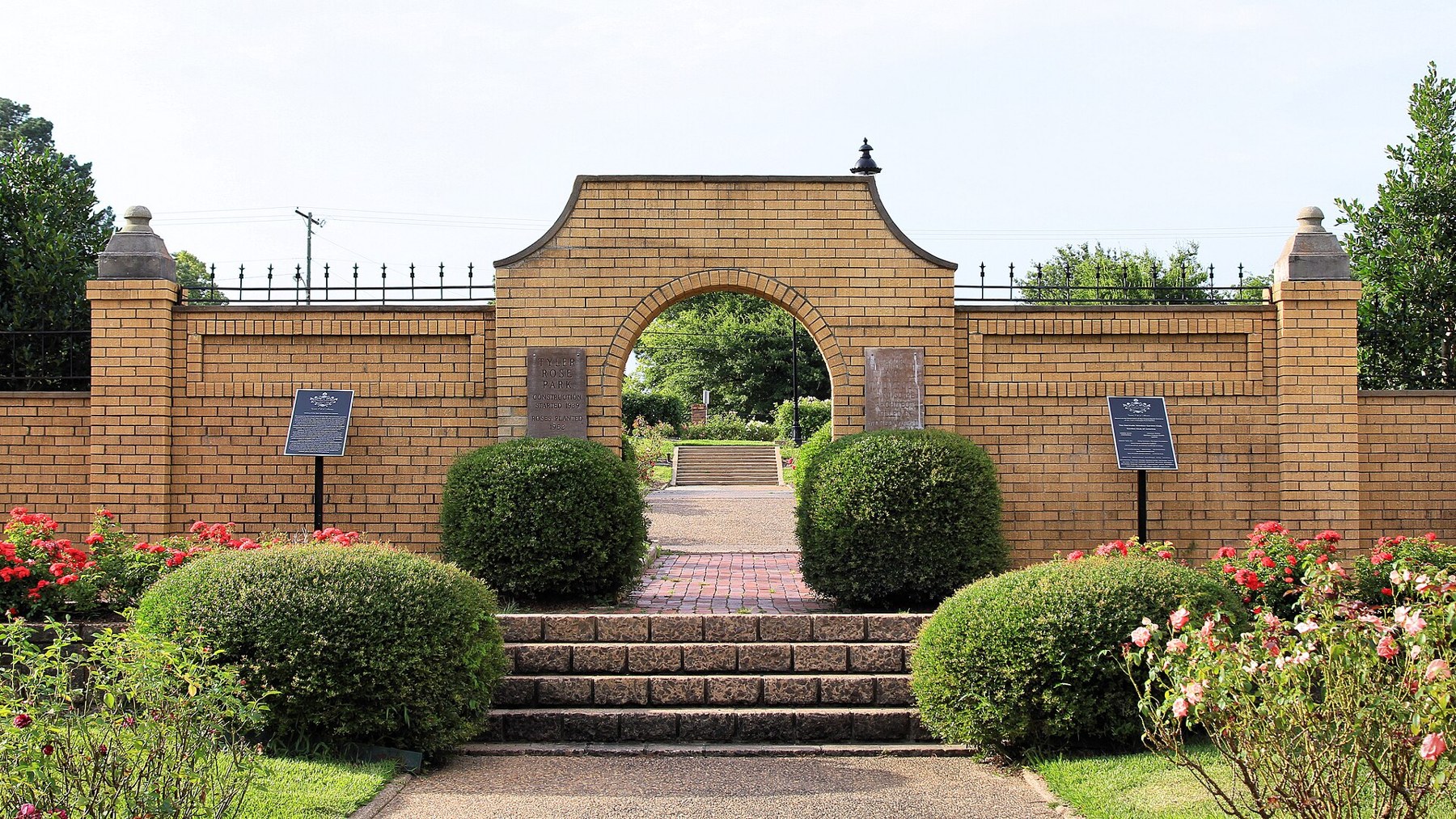
Tyler is the seat of Smith County and is known for its rose-growing history. The Tyler Rose Garden, Caldwell Zoo and the Brick Streets and Charnwood historic districts provide varied local starting points.
People who shaped Tyler
These milestones are an introduction, not a complete local history. Follow the linked city and museum sources to explore the people and places behind them.Read the local historical account.
Watch the city’s history

FROM THE ARCHIVES
History of Tyler, Texas with Henry Bell
Henry Bell discusses Tyler's history in a film shared by the Tyler Texas Chamber of Commerce.
Watch on YouTube ↗
FROM THE ARCHIVES
Building Tyler’s Brick Streets
Found footage of the construction of Tyler’s brick streets, shared by the Tyler Morning Telegraph.
Watch on YouTube ↗
FROM THE ARCHIVES
Historic Tyler on Tour
KETK visits some of the oldest houses in Tyler during Historic Tyler’s home tour.
Watch on YouTube ↗Famous people born in Tyler
See all 48 famous people


- 1846–1850
A county seat becomes a city
Smith County was created in 1846, and its hilltop county seat was named for President John Tyler. The city government incorporated in 1850, with a mayor and four aldermen.
City of Tyler ↗ - 1863
Civil War Tyler
Tyler was the site of the largest Confederate ordnance plant in Texas. In 1863 a large Confederate prison camp, Camp Ford, was built four miles northeast of town.
Texas State Historical Association: Handbook of Texas ↗ - 1877
The Tyler Tap Railroad
The first twenty-one miles of the Tyler Tap linked the city with the Texas and Pacific Railway at Ferguson. The connection helped Tyler grow into a regional railroad center.
City of Tyler ↗ - 1894
Texas College is founded
A Methodist-supported college for African Americans opened in Tyler. Its establishment added an important educational institution during an era of racial segregation.
City of Tyler ↗ - 1920s–1933
Roses shape a local identity
After disease damaged peach orchards, growers increasingly turned to roses. The rose business expanded through the 1920s and led to the first Texas Rose Festival in 1933.
City of Tyler ↗ - 1926
Tyler Junior College
Tyler Junior College was established in 1926 as part of the Tyler public school system. Along with Texas College, it helped Tyler become the leading educational center for the area.
Texas State Historical Association: Handbook of Texas ↗ - 1930s
The East Texas oil boom
Discovery of the East Texas oil field brought oil-company offices and field developers to Tyler. The boom strengthened the city's role as a regional business and service center.
City of Tyler ↗ - 1940s
America’s rose bushes
By the 1940s more than half the U.S. supply of rose bushes was grown within ten miles of Tyler. The flourishing rose business gave rise to the Texas Rose Festival, one of the city’s major attractions.
Texas State Historical Association: Handbook of Texas ↗ - 1943
Camp Fannin
Camp Fannin, a World War II infantry-replacement training center, opened ten miles northeast of Tyler, and its first trainees arrived in June 1943. Troop capacity at the height of the war was 18,680.
Texas State Historical Association: Handbook of Texas: Camp Fannin ↗ - 1971
A university for Tyler
The University of Texas at Tyler was established in 1971 as Tyler State College. By 1990 it enrolled 3,725 students.
Texas State Historical Association: Handbook of Texas ↗
See the history for yourself.
Check current opening hours and visitor information before you go: the City of Tyler.
For local services and public information, the local government website is a starting point. For historical research, consult local libraries, archives and museums and check collection-specific image permissions.
Selected milestones from the linked historical sources. This is an introduction, not a complete account of the city’s history.